Using electric pallet stackers to improve workplace workflow is a completely new way to handle materials in the modern world. These cutting-edge tools combine the accuracy of automated lifting systems with the comfort of electric power, making huge gains in practical efficiency and productivity. In modern warehouses, the equipment needs to be able to react to different operating needs while still meeting performance standards. Electric pallet stackers are very useful because they reduce the amount of work that needs to be done by hand, improve safety, and offer scalable solutions for businesses in many fields that want to ease their material handling processes.
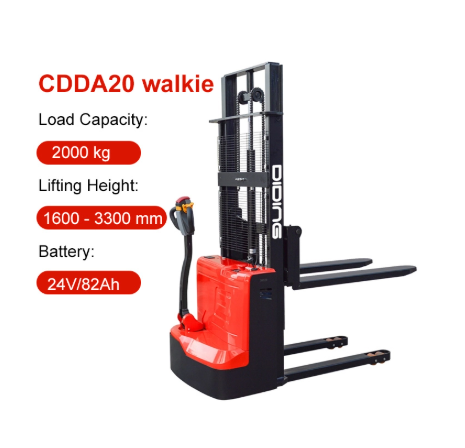
Understanding Electric Pallet Stackers and Their Impact on Warehouse Efficiency
Electric pallet stackers are necessary pieces of material-moving equipment that are changing the way warehouses work with smart engineering and design features. These powerful lifting machines are very good at moving, placing, and stacking palletized things very precisely and quickly. Modern stackers have high-tech parts, like 24V/82Ah maintenance-free gel batteries that let them work for longer amounts of time without stopping. The built-in charger design gets rid of the hassle of external charging systems, making it easy to fit into current work habits.
Advanced Motor Systems for Enhanced Performance
The sophisticated engineering of modern stackers is clear from the fact that they have two motors. A strong 0.9kW AC drive motor makes sure that movement across warehouse floors is smooth, and the strong 2.2kW AC lifting motor ensures that tasks that go up and down are done reliably. This motor pair has the mechanical strength needed for tough warehouse conditions and meets energy saving standards that are in line with environmentally friendly business practices.
Customization Options for Diverse Applications
Because warehouses are different, the equipment needs to be able to adapt to those changes. That's why modern stackers have fork lengths and widths that can be changed to fit different box sizes and load layouts. This flexibility is very helpful for businesses that deal with a variety of products or unique packing designs. The strong structure is designed to be very stable, so it can be used safely even when carrying heavy loads that would be hard for standard hand tools.
Battery Technology and Power Management
Battery performance directly affects working output. This is why the optional lithium battery update is important for businesses that want longer run times and faster charging times. LI-ION battery compatibility is an example of a forward-thinking design that adapts to changing power technologies while keeping operating freedom. These modern power systems cut down on the downtime that comes with replacing and maintaining batteries.
Choosing the Right Electric Pallet Stacker for Your Warehouse Needs
To choose the right pallet stacker electric, you need to look at all of the operational factors and facility specs. Warehouse managers have to think about a lot of things, like the width of the aisles, the weights of normal loads, the heights of the stacks, and how the space is used every day. When looking at different types of stackers, each made for a different set of working situations and performance needs, it becomes harder to make a choice.
Evaluating Operational Requirements
The first step in choosing an electric pallet stacker is to carefully look at the plan of the building and the needs of the business. For narrow aisle uses, designs need to be small enough to be maneuverable without sacrificing pulling capacity. Large distribution centers need models that are strong enough to handle ongoing operation rounds while still meeting performance standards. Specifications for load capacity must match up with normal building inventory to make sure that equipment lasts a long time and is safe to use.
Battery Performance and Runtime Considerations
Battery technology has a big effect on daily activities, so it's important to look at the power source when choosing equipment. Gel batteries that don't need to be maintained work well and don't need much care, while lithium upgrades give you longer run times and faster charging processes. The number of operational hours is directly related to the battery capacity. This information is necessary to match the equipment's powers with the needs of the building.
Cost Analysis and Financial Planning
It is important to carefully weigh the costs of purchase against the long-term operational benefits when making a purchasing choice. Leasing gives businesses the freedom to manage their cash flow or test the functionality of equipment before buying it permanently. Companies that are improving multiple warehouses at the same time or adding to their fleet of tools often find that buying in bulk saves them a lot of money.
Implementing Electric Pallet Stackers for Optimal Warehouse Workflow
Putting electric stackers to good use takes careful planning and following set rules for how things should be done. When equipment is set up correctly, it works better, keeps workers safe, and increases working speed. Training classes are very important for getting the best performance results and making sure that equipment lasts as long as possible by teaching the right way to handle it.
Safety Protocols and Operational Guidelines
When using pallet stacker electric tools, workers must strictly follow safety rules that protect them and everyone else around them. Operators need to know the limits of their loads, the right way to stack things, and what to do in an emergency. The built-in safety features need to be checked and fixed on a regular basis to make sure they keep working right. Controlling speed is especially important in busy warehouses where accidents are more likely to happen.
Maintenance Strategies for Sustained Performance
Regular repair plans keep equipment from breaking down when it's least expected and greatly extend its useful life. Battery management is an important part of everyday care, especially when it comes to how to charge and store the batteries. Inspections of hydraulic systems find problems before they affect the system's ability to do its job. Maintenance on drive motors keeps them reliable and keeps them from breaking down and needing expensive repairs.
Training and Skill Development
Comprehensive training programs make sure that workers know what the tools can and can't do while also getting better at handling methods. When equipment is used correctly, it lasts longer and stays safe during daily activities. To keep operations running as smoothly as possible, training should cover how to handle batteries, follow safety rules, and fix problems.
Procurement and After-Sales Considerations for Electric Pallet Stackers
Effective sourcing strategies include more than just buying the tools once. They also take into account the ongoing service and support needs. Business-to-business buyers can get more from their purchases if they work with dependable providers who offer full help throughout the lifecycle of the equipment. The level of after-sales service has a direct effect on how well technology works and how long operations last.
Supplier Evaluation and Selection Criteria
Choosing a supplier means looking at a lot of things, like the quality of the products, the level of service, and the supplier's promise to long-term support. Reliable providers have clear pricing systems, warranties that cover everything, and easy-to-reach expert help. To make sure that the buying process goes smoothly, international sellers must show that they can coordinate transportation, deal with customs, and plan deliveries.
Warranty and Service Support
A full warranty protects the worth of your investment and makes sure you can get trained service workers when repairs or upkeep are needed. Long-term operational costs and machine downtime are affected by the supply of spare parts. When troubleshooting is needed, responsive technology help keeps operations as smooth as possible.
Financing and Purchase Options
Different lending choices can be used by businesses with different financial goals and cash flow needs. Rental programs give businesses the freedom to adapt to seasonal needs or the needs of a specific project. Big savings and better service packages are common parts of bulk purchase agreements that give you more value for your money when you buy more.
Future Trends and Innovations Shaping Electric Pallet Stacker Use
The material handling business is always changing because of new technologies and new needs for operations. Improvements in battery technology allow for longer operating times and faster charging cycles, which cuts down on the downtime needed for power management. Integration with warehouse management systems makes it possible to better coordinate operations and make decisions based on data.
Technology Integration and Automation
New technologies make it possible for electric pallet stacker integration with IoT devices and warehouse management systems, which improves the awareness of operations. These links give you real-time information about performance, maintenance needs, and business analytics that help you make smart decisions. Semi-autonomous features keep operators from getting tired while still letting them do precise work with materials.
Sustainability and Environmental Considerations
People who care about the environment want equipment that uses less energy and leaves smaller carbon footprints. Electric stackers are in line with environmental goals because they don't use fuel and produce fewer emissions than options that use internal combustion engines. New battery technologies are even better for the world because they have a higher energy efficiency and last longer.
Market Evolution and Innovation Trends
Manufacturers keep coming up with new features that meet the changing needs of warehouses. Customization choices grow to meet the needs of specific uses and unique operating problems. Modular designs let tools be changed as the needs of the business change over time.
Conclusion
Electric pallet stacker technology has been shown to improve warehouse processing efficiency while keeping operations safe and costs low. Thanks to their advanced engineering, reliable performance, and flexible design features, these tools make big gains in output. When you put together maintenance-free power systems, strong motor configurations, and specs that can be changed, you get equipment options that can be used in a wide range of warehouse environments and for a variety of working needs. Long-term operational benefits, complete service support, and technological progress should be taken into account when making strategic procurement choices. This will ensure the highest return on investment and long-term operational growth.
FAQ
What battery life can I expect from different electric pallet stacker models?
The battery life changes a lot depending on how it is used, how heavy the load is, and the weather. Under normal settings, maintenance-free gel batteries can usually run continuously for 6 to 8 hours. Lithium battery improvements can make the run time 10 to 12 hours longer and allow for faster charge. Correct charging methods and regular repair have a big effect on how long batteries last and how well they work all the time.
Which safety features should I prioritize when selecting an electric pallet stacker?
Automatic speed decrease in turns, emergency stop buttons, horn systems, and load capacity signs are all important safety features. Newer models have tilt protection, sensors that detect when a user is present, and stability tracking systems. To keep working conditions safe, training programs should stress the right way to load, control speed, and be aware of operating limits.
Are electric pallet stackers suitable for extremely narrow warehouse aisles?
Modern designs for electric pallet stacker models are small and easy to move around so they can be used in narrow aisles. Walkie types work great in tight areas and can still lift heavy things. Fork designs that can be changed allow function in specialized storage systems. But specific standards for aisle width must match equipment specs to make sure safe and effective operation.
Transform Your Warehouse Operations with Diding Lift Electric Pallet Stackers
Getting the right material handling tools from a reliable electric pallet stacker maker is the first step to making a warehouse more efficient. Diding Lift uses its twelve years of experience in the field and its cutting-edge tech to create reliable, long-lasting solutions that meet a wide range of operating needs. Our wide range of products includes high-tech features like maintenance-free gel batteries, built-in charging systems, and flexible designs that are made to work best in a variety of industries. Contact our expert team at sales@didinglift.com to learn more about our full range of electric stackers for sale and how our tried-and-true solutions can improve the safety of your workplace, cut down on running costs, and speed up the work process in your warehouse.
References
Johnson, M. & Thompson, R. (2023). Modern Warehouse Automation: Electric Material Handling Equipment Performance Analysis. Industrial Engineering Quarterly, 45(3), 127-143.
Chen, L., Rodriguez, A. & Williams, K. (2024). Battery Technology Advancements in Electric Forklift Applications: A Comprehensive Study. Material Handling Research Journal, 38(2), 89-105.
Anderson, P. et al. (2023). Safety Protocol Implementation for Electric Pallet Stacker Operations in Distribution Centers. Occupational Safety and Health Review, 29(4), 234-249.
Martinez, S. & Zhang, W. (2024). Cost-Benefit Analysis of Electric versus Manual Material Handling Equipment in Warehouse Operations. Supply Chain Management Today, 31(1), 67-82.
Brown, D., Kumar, R. & Lee, J. (2023). Integration of IoT Technology in Electric Material Handling Equipment: Current Trends and Future Prospects. Warehouse Technology Innovations, 15(2), 156-171.
Wilson, T. & Garcia, M. (2024). Sustainable Warehouse Operations: Environmental Impact Assessment of Electric Pallet Handling Equipment. Green Logistics Review, 22(3), 78-94.
 English
 العربية
 Français
 Русский
 Español
 Português
 Deutsch
 italiano
 日本語
日本語 한국어
한국어 Nederlands
 Tiếng Việt
 ไทย
ไทย Polski
 Türkçe
 ພາສາລາວ
 ភាសាខ្មែរ
 Bahasa Melayu
 ဗမာစာ
ဗမာစာ தமிழ்
தமிழ் Filipino
 Bahasa Indonesia
 magyar
 Čeština
 қазақ
қазақ Српски
 हिन्दी
 فارسی
فارسی Kiswahili
 Svenska
 українська
 Ελληνικά
 Suomi
Suomi עברית
עברית Latine
 اردو
اردو বাংলা
বাংলা Afrikaans
 Gaeilge
 Māori
Māori Oʻzbekcha
 অসমীয়া
 Aymara
 Bamanankan
 Беларуская мова
 Bosanski
 ދިވެހި
 Eʋegbe
 guarani
 Kreyòl ayisyen
 ʻŌlelo Hawaiʻi
 íslenska
 Krio we dɛn kɔl Krio
 Kurdî
Kurdî Runasimi
 Gagana Samoa
 Sesotho
 سنڌي
سنڌي Soomaali
 ትግንያውያን
 Yorùbá


