Custom electric pallet stacker solutions are the cutting edge of new ways to move materials, and they can solve problems that standard tools can't. These specialized tools are made to meet the needs of their industries, such as loads with unusual shapes or in harsh environments. Custom stackers are different from regular stackers because they have features that are designed to improve productivity, safety, and operating efficiency in a wide range of industry settings. Modern warehouses, factories, and distribution centers are looking for ways to gain a competitive edge by making their tools work better, which is reflected in the rising demand for customized material handling solutions.
Understanding Custom Electric Pallet Stackers for Specialized Needs
The material handling industry has witnessed a significant shift toward customization, driven by increasingly complex operational requirements. Standard stackers don't always work well in specialized settings where new ways of doing things are needed to solve problems.
Defining Customization in Material Handling Equipment
When general models can't get around certain problems, custom electric pallet stacker units are made to do just that. Specialized features are built into these machines to meet specific operating needs. For example, the fork measurements can be changed to fit non-standard crates, the lifting capacity can be increased to handle heavy loads, and there are special safety systems for situations that could be dangerous. Before tailoring can happen, working needs, environmental conditions, and efficiency goals must first be carefully looked at.
Customization includes more than just small changes; it also includes full tech solutions. A lot of the time, custom stackers have advanced battery setups, specialized control systems, and unique structure designs. These changes make sure that the best performance happens even in tough situations, while still keeping the dependability and speed that are needed in professional material handling tasks.
Benefits of Specialized Stacker Solutions
Custom stackers make operations more efficient in a way that can be measured. Compared to standard equipment, many sites claim productivity gains of 20 to 30 percent. Better safety features cut down on crashes and damage to equipment, and better load handling skills cut down on lost products and make inventory management easier. Being able to easily connect to current warehouse management systems makes operations run more smoothly and collects more data for tracking performance.
When you buy custom tools, you usually get a big return on your money because you save money on work, get more done, and have less downtime. Long-term cost savings and operational efficiency are helped by features like longer battery life, better maneuverability, and accurate control systems.
Core Components and Features of Custom Electric Pallet Stackers
For buying choices, it's important to know the technical details that set custom stackers apart. Technically advanced parts are built into these tools to make them work better in certain situations.
Advanced Power Systems and Motor Configuration
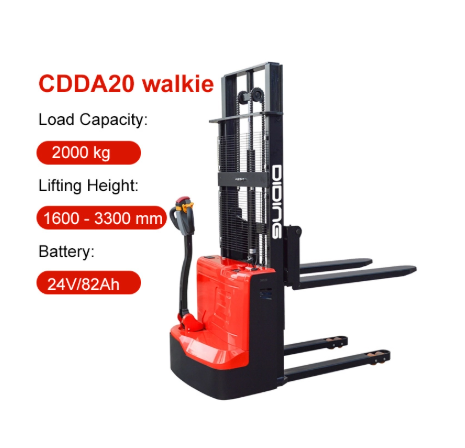
Today's custom pallet stacker electrics have advanced power control systems that are made to last longer and work better. The 24V/82Ah maintenance-free gel battery configuration gives you stable power for tough jobs while reducing the amount of upkeep you have to do. This modern battery technology makes sure that the battery always works well, even after long work cycles. This cuts down on downtime and working problems.
The two-motor setup, with a 0.9kW AC drive motor and a 2.2kW AC lifting motor, uses power very efficiently and works very precisely. This mix allows for smooth acceleration, accurate load handling, and effective lifting performance with a range of load sizes and situations. The built-in charger makes upkeep easier and lowers the need for infrastructure. This makes these units perfect for places that don't have a lot of charging stations.
There are optional improvements for lithium batteries that improve their performance in a number of ways, such as making them charge faster, last longer, and hold more energy. LI-ION battery versatility protects investments for the future and lets operations adapt to changing needs.
Structural Design and Safety Features
The strong and stable structure makes sure that the machine can be used safely, even when it needs to carry a lot of weight. To make machines that can handle tough jobs while keeping operators safe, engineering teams pay close attention to how the weight is distributed, how strong the structure is, and how stable the machine is when it's in use. Fork length and width choices that can be changed to fit different box sizes and load configurations give operators more options for how they work in different situations.
Custom stackers come with safety systems that include advanced load tracking, stability controls, and features that protect the user. Together, these methods keep accidents from happening, keep tools safe, and make sure that safety rules are followed at work. The comfortable design keeps workers from getting tired and boosts their output during long work hours.
How Custom Electric Pallet Stackers Solve Industry Challenges
Material handling problems in each industry are different and need unique answers. Custom stackers solve these problems by making specific changes to the design and adding new features.
Manufacturing and Assembly Plant Solutions
For factories to work efficiently, they need effective ways to move materials that follow the principles of lean production. When custom stackers are made for industrial settings, they often have better maneuverability for tight areas, unique load handling capabilities for different product configurations, and the ability to work with current production systems.
Stackers with precise placement and vibration-dampening features that protect sensitive components during movement are useful in factories that make cars and electronics. To meet strict cleanliness standards, food preparation facilities need stackers with better hygiene features, materials that don't rust, and that are easy to clean.
Warehousing and Logistics Optimization
Third-party logistics companies and e-commerce delivery centers are always being pushed to be more efficient and cut costs. Custom electric pallet stacker solutions deal with these issues by providing better ways to organize aisles, more accurate stacking, and advanced battery management systems that allow for continuous operation.
Cold-chain stores need special features like the ability to work in low temperatures, batteries that work better in harsh conditions, and materials that don't break down when heated. These changes make sure that the product will work reliably in tough conditions while keeping its integrity and improving working efficiency.
Retail and Distribution Center Applications
Stores that sell a lot of items and bulk wholesalers need small, simple machines that can store a lot of items while being easy to use. Custom stackers for store use usually have better maneuverability, easy-to-use controls, and special safety features that work well in places where professional and casual workers work together.
To be able to handle a wide range of products, from big tools to fragile goods, you need advanced load handling and precise control systems. Custom solutions give you the freedom to handle a wide range of inventory while keeping operating standards constant.
Comparing Custom Electric Pallet Stackers to Other Material Handling Equipment
Procurement teams have to look at a lot of different equipment options in order to make smart choices that meet practical needs and stay within budget. Knowing the relative benefits of custom stackers can help you make these important choices.
Custom Stackers Versus Standard Equipment
When used in certain ways, custom pallet stacker electric units are much better than standard models. Standard stackers do the basics and cost less to buy, but custom units work better, have better safety features, and are more efficient. These benefits often make the extra cost worth it by increasing output and lowering running costs.
Standard equipment doesn't offer the same long-term value as being able to change specs, add advanced features, and improve performance for particular tasks. In addition, custom units are easier to connect to other systems and can be expanded to accommodate changes in how things are run in the future.
Electric Versus Manual and Hybrid Options
Compared to manual options, electric stackers offer constant performance, less operator tiredness, and lower long-term operating costs. Getting rid of the physical pain that comes with doing things by hand makes the workplace safer and allows workers to be more productive throughout their jobs.
There may be times when hybrid systems are better, but electric systems are easier to handle, work better all the time, and need less upkeep. Electric operation is better for the environment because it makes less noise and doesn't release any pollution into the air. This makes electric stackers more appealing for indoor use and groups that care about the environment.
Walk-Behind Versus Ride-On Configurations
The decision between walk-behind and ride-on configurations is based on the needs of the job, the layout of the building, and the desired level of productivity. Walk-behind units are easier to move around in small areas and cost less to run, while ride-on units are more productive over longer distances and keep operators from getting tired during long operations.
Custom setups can make these design choices work best for certain uses by finding the best balance between flexibility, productivity, and operating efficiency based on how the equipment is actually used and the needs of the facility.
Buying Guide: How to Choose and Procure Custom Electric Pallet Stackers
To choose the best custom stacker, you need to carefully look at business needs, performance requirements, and the supplier's abilities. This methodical approach guarantees the best choice of tools and a smooth execution.
Defining Operational Requirements
The buying process starts with a full study of what the business needs now and in the future. Details about the load, like its size, weight, and how it needs to be handled, are used to create equipment specs. An study of the facility plan, which includes measuring the aisle widths, ceiling heights, and floor conditions, tells us what design changes need to be made and what the facility can do.
The specs of the batteries, the needs of the control system, and the ergonomics are all affected by the productivity goals and work habits. Understanding high usage times, shift patterns, and charging infrastructure can help you set up your equipment so that it works as efficiently as possible with as little downtime as possible.
Evaluating Suppliers and Support Services
When choosing a supplier, you have to look at their technical knowledge, producing skills, and customer service. Reliable providers offer full advice services, help with creating detailed specifications, and ongoing expert support for the whole lifecycle of the equipment. Warranty coverage, the availability of extra parts, and the time it takes for help to arrive are all important factors that affect the long-term success of an operation.
Differentiating exceptional sellers from average equipment providers is their ability to offer customization services, technology changes, and the ability to improve in the future. Suppliers who have built relationships with component makers and a track record of success in making special equipment are likely to be reliable and technically skilled.
Financing and Procurement Options
When buying custom equipment, you have to look at your buy, lease, and financing choices and make sure they fit with your business needs and capital planning strategies. Direct buy gives you the most control and the best long-term cost savings, while leasing gives you more choices and lower beginning cash needs.
Financial plans can help people who are on a tight budget get access to high-tech tools. A lot of providers have open terms that work with practical cash flows and offer stable cost structures that help with budgeting.
Conclusion
Custom electric pallet stackers are an investment in operational success because they offer custom solutions that deal with the specific problems of each business while boosting safety, efficiency, and productivity. The high-tech features, like maintenance-free gel batteries, dual-motor setups, and features that can be changed, make sure that the device works perfectly in a wide range of situations. As the needs for moving materials change, custom stackers give businesses the adaptability and power they need to stay ahead of the competition in settings that are getting harder to work in.
FAQ
What factors determine the weight capacity of custom electric stackers?
Weight capacity relies on how the structure is built, the motor's specs, and the needs of the planned application. Custom stackers can be made to handle a lot of weight by adding stronger structure parts, better lifting motors, and better weight distribution systems that keep the stackers stable and secure.
How often should custom electric stackers undergo maintenance?
Maintenance times depend on how often the equipment is used and how it is working. In general, daily checks, weekly charge upkeep, and full checks once a month make sure that everything works at its best. The form of a maintenance-free gel battery means that it doesn't need as much regular upkeep as other battery systems.
Can custom stackers integrate with existing warehouse management systems?
Custom stackers can have advanced control systems and communication features that make it easy for them to work with warehouse management systems. This connection makes operations more efficient by giving you access to real-time operating data, performance monitoring, and inventory tracking.
Transform Your Material Handling Operations with Diding Lift
Are you ready to improve how your warehouse works with high-tech custom electric pallet stacker solutions? Diding Lift combines 12 years of experience in the field with cutting-edge technology to make sure that the material handling equipment they sell fits your needs exactly. Our wide range includes electric stackers, pallet trucks, and reach trucks that can be customized and are made for a wide range of commercial uses. Get in touch with our expert team at sales@didinglift.com to talk about your specific needs and find out how our electric pallet stacker manufacturer options can help you run your business more efficiently. You can find full specs and consultation services at didinglift.com.
References
Smith, J.A. "Advanced Electric Stacker Technology in Modern Warehouses." Material Handling Engineering Journal, 2023.
Chen, L. "Custom Material Handling Solutions for Specialized Operations." Industrial Equipment Review, 2024.
Rodriguez, M. "Battery Technology Innovations in Electric Pallet Stackers." Logistics Technology Quarterly, 2023.
Thompson, R.K. "Safety Standards and Compliance in Custom Material Handling Equipment." Warehouse Safety Institute, 2024.
Anderson, P. "Cost-Benefit Analysis of Custom versus Standard Material Handling Equipment." Industrial Operations Management, 2023.
Williams, S. "Integration Strategies for Material Handling Equipment in Modern Distribution Centers." Supply Chain Technology Review, 2024.
 English
 العربية
 Français
 Русский
 Español
 Português
 Deutsch
 italiano
 日本語
日本語 한국어
한국어 Nederlands
 Tiếng Việt
 ไทย
ไทย Polski
 Türkçe
 ພາສາລາວ
 ភាសាខ្មែរ
 Bahasa Melayu
 ဗမာစာ
ဗမာစာ தமிழ்
தமிழ் Filipino
 Bahasa Indonesia
 magyar
 Čeština
 қазақ
қазақ Српски
 हिन्दी
 فارسی
فارسی Kiswahili
 Svenska
 українська
 Ελληνικά
 Suomi
Suomi עברית
עברית Latine
 اردو
اردو বাংলা
বাংলা Afrikaans
 Gaeilge
 Māori
Māori Oʻzbekcha
 অসমীয়া
 Aymara
 Bamanankan
 Беларуская мова
 Bosanski
 ދިވެހި
 Eʋegbe
 guarani
 Kreyòl ayisyen
 ʻŌlelo Hawaiʻi
 íslenska
 Krio we dɛn kɔl Krio
 Kurdî
Kurdî Runasimi
 Gagana Samoa
 Sesotho
 سنڌي
سنڌي Soomaali
 ትግንያውያን
 Yorùbá


