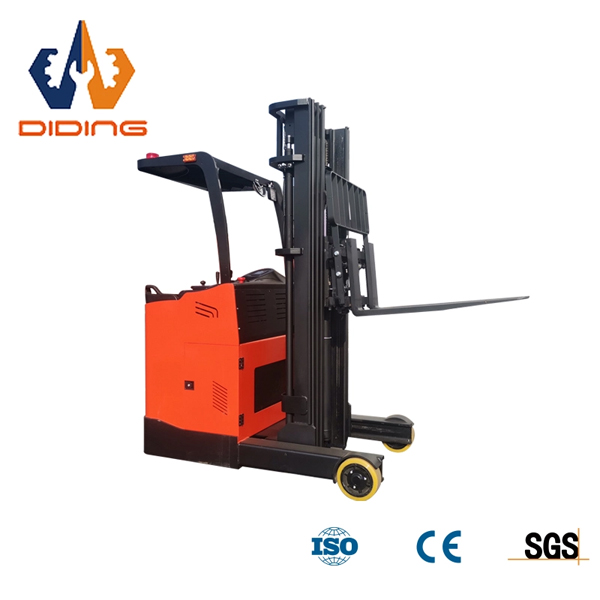
Reach forklifts change the way vertical storage is done by making the best use of warehouse space thanks to their unique design. These specialized material handling machines make it possible to work in tight aisles and get to storage levels higher than regular machines can. Their extended reach feature lets workers pick up and put down loads at great heights while still being stable and accurate. This improved vertical accessibility changes the plan of warehouses so that companies can store more goods in smaller spaces while still keeping safety and operational standards high throughout their buildings.

Understanding Reach Forklifts and Their Role in Vertical Storage
Reach forklifts are a special kind of material-moving equipment that was made to work in high-rack warehouses, where increasing vertical room is very important. The extended reach features of these new units let workers get to higher storage levels that are out of reach for regular counterbalance units.
The main idea behind the design is a telescoping mechanism that extends forward from the mast assembly. This lets you precisely place and retrieve loads in tight vertical areas. This reaching ability usually goes across several feet horizontally, which lets operators get to different rack places without having to move the whole machine.
Key Design Features and Specifications
Modern versions of reach trucks have a number of important features that are specifically designed to meet the needs of vertical storage. Load capacities are usually between 1,000 and 2,500 kilograms, and lifting heights can be anywhere from 3 to 12 meters, based on the needs of the job. The short wheelbase makes it possible to move through tight aisles and keep the vehicle stable while working at heights.
Battery technology is very important for long-term performance. Standard 24V and 48V lead acid battery configurations provide stable power during long shifts. Modern types come with optional lithium battery upgrades that give them longer run times and faster charging times, which greatly reduces the amount of time they need to be shut down for maintenance.
Operational Advantages Over Traditional Equipment
Compared to counterbalance units and order pickers, reach trucks reduce the need for aisle width while raising the amount of space available. With the narrow profile form, aisles can be about 8 to 10 feet wide, while counterbalance models need 12 to 14 feet. This narrowing of the aisles immediately leads to more storage space within the same facility footprint.
Reach trucks can be easily moved around, which makes them perfect for high-rack picking and stocking processes that are necessary in today's supply chains. When operators are moving loads, they can see better, and convenient control systems keep them from getting tired after long shifts.
Advantages of Using Reach Forklifts for Vertical Storage
Narrow aisle reach forklifts deliver significant enhancements to warehouse space utilization by enabling narrow aisle configurations and higher rack installations, thereby maximizing storage density while reducing facility footprint costs. These improvements in efficiency directly lead to better operational economics and a stronger place in the market.
Reach trucks are designed to be faster and more maneuverable, which means they can handle loads faster. This increases warehouse efficiency while lowering costs for labor and running the business. Throughput improvements can be seen because operators can finish more jobs during their shifts.
Space Utilization and Density Optimization
Reach trucks can go through narrow aisles, which lets warehouse planners make the most of storage space in existing buildings. By cutting the width of the aisles by 30 to 40 percent compared to counterbalance equipment, facilities can add a lot more storage space without having to pay a lot of money for growth.
Businesses can make good use of their ceiling height by using vertical reach powers that go up to 12 meters. This lets them add extra storage levels that would otherwise be out of reach. This ability to expand vertically is especially useful in real estate markets with high prices, where expanding a building would be too expensive.
Enhanced Safety and Ergonomic Benefits
Reach trucks make high storage areas safer places to work by designing operator compartments that are more comfortable and by using precise control systems that lower the risk of accidents. The stable platform design keeps operators from getting too tired while still letting them see clearly during load handling operations.
Modern reach trucks have advanced balancing systems that keep them from tipping over and dropping loads, which protects both people and goods. In high-rack environments, where load stability is key to operational safety, these safety factors become even more important.
Lifecycle Performance and Maintenance Benefits
Reach trucks last a lot longer if they are properly maintained. This makes them more dependable and cuts down on costly downtime. The strong structure, which is made with German-imported steel for the high mast, will last even in tough operational circumstances.
Regular repair schedules that focus on taking care of batteries, inspecting hydraulic systems, and lubricating mechanical parts make equipment more available. These preventative steps lower the cost of emergency repairs and keep the equipment's performance level stable over its lifetime.
Comparing Reach Forklifts with Alternative Vertical Storage Solutions
Compared to counterbalance and sit-down units, reach trucks offer a better balance of reach height, load capacity, and aisle compatibility requirements when looking at vertical storage equipment choices. Because of their balanced performance profile, they are perfect for a wide range of workplace uses.
But depending on the needs of the job, some uses may require different kinds of equipment. Counterbalance units work great in situations where they need to carry more weight or where the layout of the building needs to be more open and aisle width limits don't matter as much for saving space.
Performance Comparison Analysis
When it comes to direct order delivery, order pickers and narrow aisle reach forklift are great, but they can't reach high enough for high-rack storage systems. When compared to advanced reach truck types, which can reach up to 12 meters, these units usually work well up to 8 meters.
Telehandlers can be used in a variety of situations, but their larger size makes them less suitable for warehouses. When working outside, telehandlers' ability to handle rough ground is useful, but it doesn't help much in a controlled warehouse, where reach trucks are better.
Investment and Procurement Considerations
You can choose between new, used, or rented reach trucks based on your budget, the size of your business, and how flexible you need to be. New equipment comes with a guarantee and the newest technology, while certified pre-owned units are less expensive and have been proven to work well.
Buying from reputable sellers who offer certified pre-owned units and clear financing improves the quality of the purchase and the customer's long-term happiness. Full service support and easy access to parts make sure that equipment keeps working well throughout its lifetime, which protects the value of the investment over time.
Selecting the Right Reach Forklift for Your Vertical Storage Needs
To pick the best reach truck, you need to carefully match important factors like load size, battery runtime, and physical dimensions with the way your warehouse is set up and how you handle products. This picking process has a direct effect on how well operations run and how much money is made back.
Leading makers make models that are reliable and up-to-date in terms of technology. They also have large dealer networks that make sure that warranties are honored and parts are easy to find. These support networks are very important for keeping equipment up and running consistently in warehouses that are hard on it.
Technical Specification Matching
The load capacity needs to match the average pallet weights and product features in your business. Standard reach trucks can easily move loads weighing between 1,000 and 2,500 kilograms, but for specific tasks, they may need to be customized to meet particular needs.
When working multiple shifts, it's important to think about battery runtime because charging times can affect output. Standard lead acid battery systems work well, but you can get lithium battery improvements that give you longer runtime and shorter charging times for more demanding uses.
Operational Training and Maintenance Planning
To reach full performance potential and safety standards, it is still important to have proper operator training and follow strict maintenance routines. Along the working lifecycle, these factors have a direct effect on how much time the equipment is used and how much it costs to fix.
Training programs should stress safe ways to operate, how to maintain batteries, and the need for daily inspections. Operators who are well-trained can get more done in vertical storage spaces while also lowering the risk of accidents and equipment wear.
Supplier Expertise and Support Services
For equipment such as narrow aisle reach forklift to keep working well in changing vertical storage operations, decision-makers should put supplier knowledge and full after-sales support at the top of their lists. Reliable technical help and quick access to parts keep operations running smoothly and reduce the cost of downtime.
Service options like preventative maintenance programs, emergency repair reaction, and help with operator training all play a big role in making sure that equipment works well and protects investments over time.
Integrating Reach Forklifts into Your Warehouse Storage Strategy
Using reach trucks effectively in vertical storage plans leads to clear improvements in how much room is used and how efficiently operations are run. In the real world, projects show a quick return on investment through lower facility costs and higher throughput.
Through better aisle layouts and higher rack heights, logistics providers and manufacturing facilities have been able to increase room utilization by 20 to 40 percent, according to case studies. These improvements in efficiency directly lead to lower storage costs per unit and a better place in the market.
Implementation Best Practices
To integrate reach trucks effectively, you need to plan everything, from finding the best rack layout to creating training programs for operators and making maintenance schedules. These steps help make sure that changes go smoothly and that work goals are met quickly.
Changing the layout of a building might need the help of an expert to make sure that the rack spacing and aisle configurations are best for reach truck operations. When you plan ahead, you can avoid having to make expensive changes after the equipment is set up and get the most out of the room you have.
Technology Integration and Future Trends
New trends include combining automation and smart technologies that make it easier to manage supplies and use less energy. These technological advances put businesses in a good situation to keep getting more efficient and gain a competitive edge in logistics markets that are always changing.
Models that are electric or use less energy are in line with companies' sustainability goals and meet the needs of growing environmental duty and regulatory requirements. These things become more and more important when planning a building and choosing equipment.
Conclusion
Reach forklifts fundamentally transform vertical storage capabilities by maximizing space utilization while maintaining operational safety and efficiency standards. Their specialized design enables businesses to increase storage density significantly without facility expansion costs. The combination of narrow aisle operation, extended reach capabilities, and enhanced lifting heights creates compelling value propositions for diverse industrial applications. Investment in quality reach truck solutions delivers measurable returns through improved productivity, reduced operational costs, and enhanced competitive positioning in dynamic market environments.
FAQ
What lifting heights are available in modern reach forklift models?
Modern reach truck models offer lifting heights ranging from 3 to 12 meters, providing flexibility for various warehouse rack configurations. Higher capacity models maintain stability and precision even at maximum extension heights, ensuring safe operations in demanding vertical storage applications.
How do reach forklifts improve warehouse safety compared to traditional equipment?
Reach trucks incorporate advanced stability systems, ergonomic operator compartments, and precise control mechanisms that reduce accident risks significantly. The improved visibility and stable platform design minimize operator fatigue while maintaining optimal load control throughout vertical storage operations.
What battery options are available for reach forklift operations?
Standard configurations include 24V and 48V lead acid battery systems providing reliable performance throughout extended shifts. Optional lithium battery upgrades offer enhanced runtime, faster charging capabilities, and reduced maintenance requirements for demanding operational environments.
Diding Lift: Your Trusted Reach Forklift Supplier for Vertical Storage Solutions
Diding Lift specializes in delivering advanced reach truck solutions engineered for optimal vertical storage performance across diverse industrial applications. Our comprehensive product portfolio features lifting heights ranging from 3 to 12 meters, supported by German imported steel mast construction ensuring exceptional durability and stability. With flexible operation capabilities, optional lithium battery upgrades, and solid structural designs, our reach forklifts deliver reliable performance in demanding warehouse environments. Contact our expert team at sales@didinglift.com to explore how our reach forklift solutions can transform your vertical storage efficiency and operational productivity.
References
Materials Handling and Management Society. "Vertical Storage Equipment Performance Standards and Safety Guidelines." Industrial Equipment Journal, 2023.
Warehouse Operations Research Institute. "Space Utilization Optimization in Modern Distribution Centers: Equipment Selection and Layout Design." Logistics Management Quarterly, 2023.
International Association of Material Handling Engineers. "Reach Truck Technology Advances and Operational Benefits Analysis." Material Handling Engineering Review, 2023.
American Society of Industrial Engineers. "Comparative Analysis of Warehouse Equipment Performance in Vertical Storage Applications." Industrial Engineering Journal, 2022.
National Institute for Occupational Safety and Health. "Forklift Safety Standards and Best Practices for High-Rack Warehouse Operations." Workplace Safety Guidelines, 2023.
Supply Chain Equipment Manufacturers Association. "Energy Efficiency and Sustainability Trends in Material Handling Equipment Design." Green Logistics Technology Report, 2023.